
The First Mistake Happens Before the Truck Stops Rolling
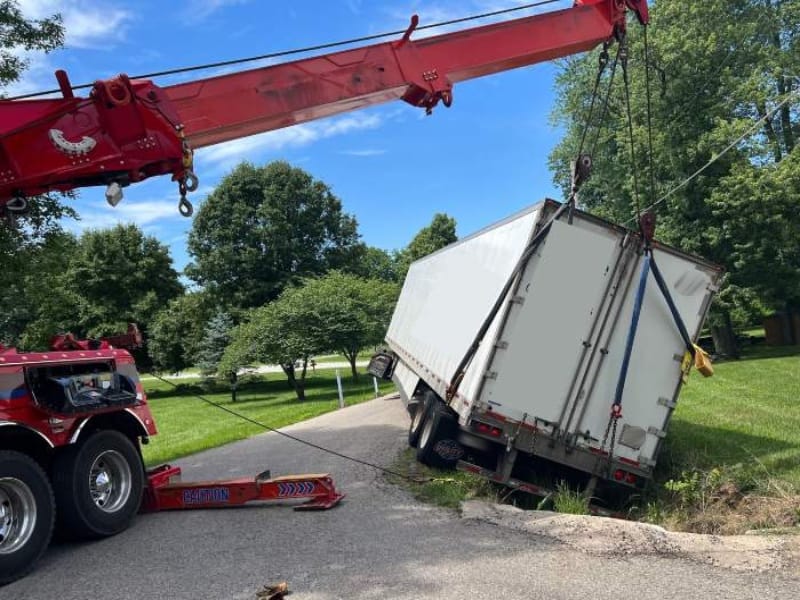
A loaded step deck lost an alternator just south of Pendleton after a night of rain, and the driver eased onto the grass shoulder. Ten minutes later the right side was sunk and we were no longer talking about a quick roadside fix. That’s how a simple call turns into an I-69 heavy towing job before the sun is fully up. We see it every wet weekend between Indianapolis and Fort Wayne.
If the truck still moves at all, getting to pavement changes everything. Exit ramps, wide on-ramps, or a weigh station give us room to work and keep traffic off your back. We’ve watched drivers stop the moment a light comes on, even with a safe pull-off half a mile ahead. That half mile can save an hour or two later.
Treating Triangles Like a Suggestion
We still roll up on scenes with one triangle tossed behind the trailer. It doesn’t cut it. Proper placement is simple and quick, and it buys you space from traffic that’s moving 70 plus.
Put them out like this:
- One at about 10 feet behind the trailer
- One at roughly 100 feet
- One at 200 feet or more on curves or hills
It takes a few minutes. Around Daleville and the Marion exits, that extra distance matters because traffic crests hills fast and doesn’t slow down for a dark trailer.
When the Driver Gets Out and Starts Doing Things
The urge to fix it right away
We get it. Nobody wants to sit and wait. Drivers start pulling straps, shifting pallets, or digging out around tires. That usually makes the job longer and harder once we arrive.
We’ve shown up to find freight half off a trailer and a driver already worn out. On I-69 heavy towing calls, we plan the load before we touch it. Guesswork creates more problems than it solves.
Where you stand matters
Standing next to the trailer feels safer than sitting in the cab, but traffic doesn’t see it that way. Air blasts from passing semis can rock a rig hard, especially in open stretches near farmland.
We’ve had drivers step out and get too close to the travel lane. One mirror clip or drift is all it takes. During I-69 heavy towing work, we keep people clear until cones and trucks are set.
Underestimating Heavy Recovery Time
What drivers expect versus reality
A lot of drivers tell dispatch they’ll be rolling again in an hour. That’s almost never how it goes with a loaded trailer off pavement. Soft shoulders, broken fifth wheels, or jackknifes slow everything down.
Most I-69 heavy towing recoveries land somewhere between two and four hours. Winter pushes that longer, especially when we’re working around plows and slush buildup.
What actually eats the clock
The tow itself isn’t always the longest part. We spend time clearing cargo, setting lines, and stabilizing before any pull happens. A clean winch-out might run 90 minutes, but those are the easy ones.
Throw in mud near the Fort Wayne stretch or a tight shoulder near Anderson, and the timeline stretches. That’s just how I-69 heavy towing plays out in real conditions.
Forgetting to Communicate the Right Details
Dispatch gets a lot of vague calls. “I’m on I-69, truck won’t move” doesn’t help much when you’re covering miles of highway. We’ve had drivers off by an exit or two, which delays everything.
What helps is simple: nearest mile marker, direction of travel, cargo type, and what the truck is doing or not doing. On I-69 heavy towing runs, that information lets us bring the right truck the first time instead of swapping equipment mid-job.
How Paddack’s Handles I-69 Heavy Towing Across Central Indiana
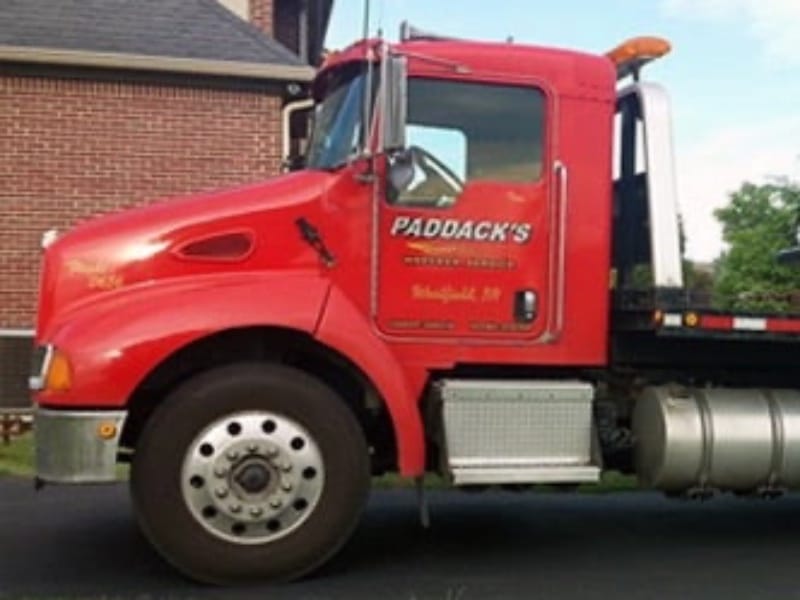
We’ve been running heavy wreckers out of central Indiana since 1975, and most of our crew can picture the problem spots on I-69 without looking at a map. There are shoulders we avoid after rain and exits we prefer for staging long trailers. That kind of memory comes from years of doing I-69 heavy towing in the same corridors.
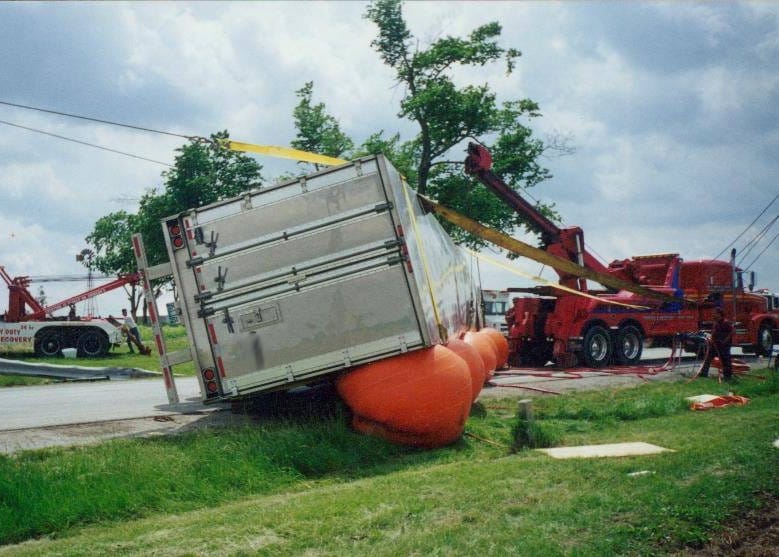
The calls we see most are brake failures on loaded box trucks, jackknifes during rain near Pendleton, and rollovers closer to Marion. Our drivers bring rotators, slide axle trucks, and heavy wreckers depending on the job, and we plan each I-69 heavy towing and recovery based on what’s actually in front of us. Some days it’s a quick pull. Other days it’s hours in the mud with traffic flying by. That’s just a normal week out here.
FAQs
How long should I wait before calling a tow truck after my truck breaks down?
Most drivers should call within ten minutes of pulling over, especially if the rig is loaded or partially blocking a lane. Waiting too long means losing daylight and racking up traffic risk. Quick calls also let dispatchers send the right size of wrecker the first time.
Can a regular tow truck pull a fully loaded semi?
No. A fully loaded class 8 truck needs a heavy duty wrecker built to handle the weight, often a quint axle or a rotator. Standard flatbeds are rated for passenger vehicles. Sending the wrong rig wastes hours and can damage the trailer.
What should I tell dispatch when I report a breakdown?
Give them the truck type, loaded weight, what failed on the dash, and an exact location with mile marker if possible. Mention if the truck is on the shoulder or off in the grass. Add the trailer length and if the load is hazardous.
Is it safe to stay in the cab while waiting for a tow?
Most fleet safety policies say no. Wind gusts from passing trucks can rock a parked rig, and a rear end collision is a real risk on a busy highway. The safer spot is behind the guardrail on the off traffic side with a reflective vest on.
How much can a heavy duty tow cost on a busy interstate?
A basic heavy winch out runs around $500 to $1,200 in many regions. A full recovery from soft ground or a jackknife can run several thousand. Pricing depends on equipment, hours on scene, and if traffic control is required.
What happens if I do not put out triangles after stopping?
FMCSA can issue a violation that goes on the driver record, and insurance can use a missing triangle layout against the driver in a crash claim. The bigger issue is the safety risk to anyone approaching the rig. Triangles take three minutes to set out.