
Curves Ahead and Trouble Behind
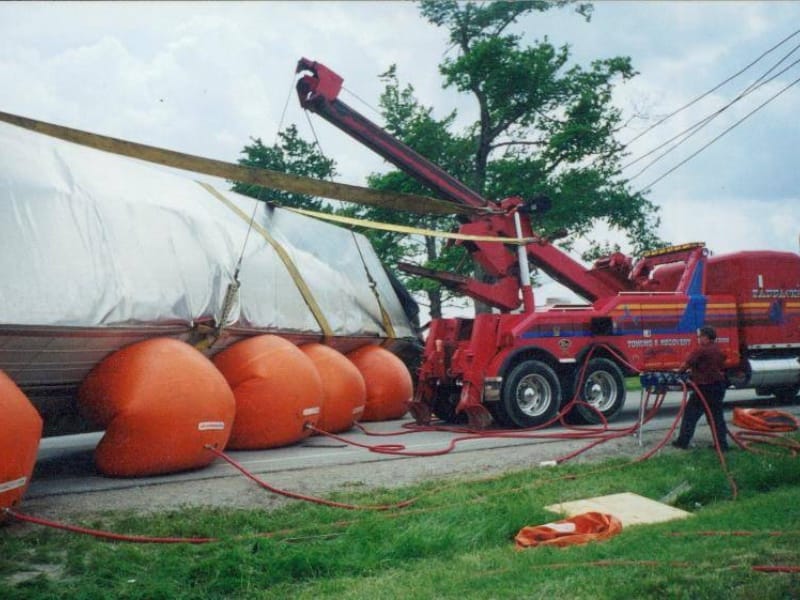
It’s 5:40 one rainy morning near the I-69. We get a call for a loaded box trailer laying across the shoulder and one lane. The driver missed the curve at the end of an exit ramp by maybe 10 mph, but with 42,000 pounds of bottled drinks behind him, that was enough. That’s a typical towing scenario we’re dealing with. Calls like that are a big part of I-69 semi towing jobs we take on, especially through the long freight stretches between Fort Wayne, Indianapolis, and Evansville.
Curves, Ramps, and Heavy Loads Catch Drivers Off Guard
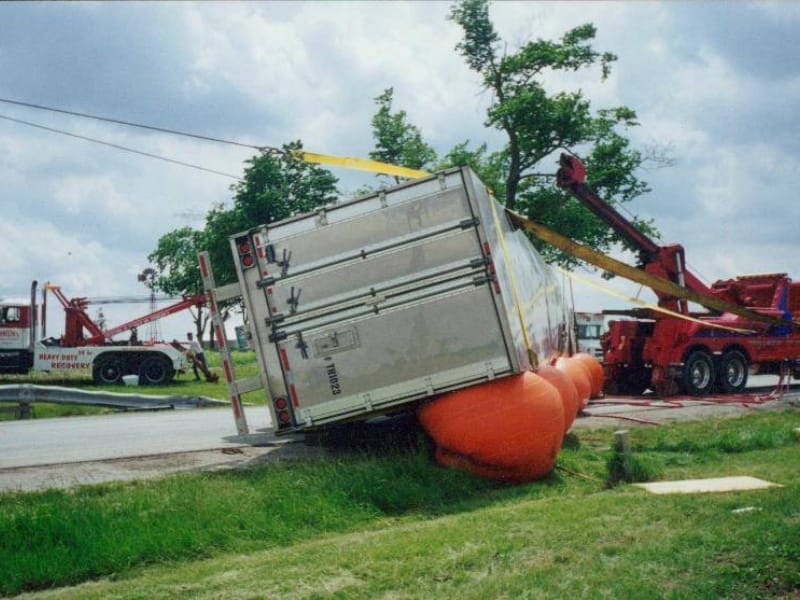
Most of the tractor trailer rollovers we see start in the same places. Exit ramps. Tight construction shifts. County road intersections where a truck has to make a hard right with traffic stacked behind it. Drivers spend hours running straight on I-69, then hit a curve near Anderson or Marion and carry too much speed into it. A truck that feels planted at 68 mph on the interstate can get light in a hurry on a ramp posted for 30.
The load matters more than most people think
A lot of drivers blame weather first. Rain and snow matter, but cargo placement causes just as many problems. For example, a dry van hauling paper rolls tips toward the shoulder because the load shifted two feet during a quick lane change.
Tankers are even worse. A half-full tanker moving through southern Indiana can start pushing the tractor sideways before the driver even realizes it.
Small Mistakes Turn Into Big Recoveries Fast
We cover a lot of ground because Paddack’s Wrecker Service has 8 locations across Indiana. That means we spend a lot of time on I-69, I-70, I-65, and the smaller freight corridors that connect them. By the time we get to a rollover, the story is usually familiar. The driver was tired after a long overnight run. Traffic slowed near a work zone. The truck drifted onto the shoulder, then the driver jerked the wheel back too hard.
That is where I-69 semi towing turns into a long day. A simple rollover can block lanes for four or five hours if the trailer has to be unloaded before we can pull it upright. We usually spend 20 to 30 minutes just clearing loose freight and broken pallets out of the roadway.
- Slow down before every exit ramp, even if the road looks dry
- Keep heavy freight low and centered in the trailer
- Leave more room in construction zones near Fishers and Fort Wayne
- Pull over if you catch yourself fighting to stay awake
- Take curves at the truck speed, not the speed of the cars around you
The truckers who avoid these calls usually do the boring stuff.
They check straps twice.
They take the extra ten minutes at a rest area.
They stay out of the left lane when traffic gets tight.
That kind of driving prevents a lot of I-69 semi towing calls.
How Paddack’s Wrecker Service Handles I-69 Semi Towing Across Indiana
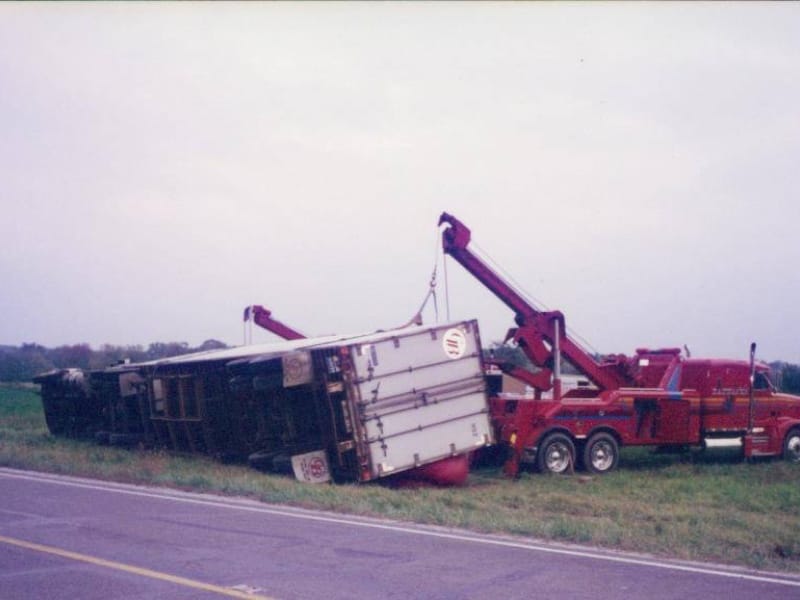
Because we have 8 locations across the state, we can reach a lot of interstate traffic without sending a truck two hours from the other side of Indiana. We handle I-69 semi towing from the Michigan line down through Indianapolis and farther south toward Evansville. Some days it is a tipped grain trailer outside Huntington. Other days it is a reefer on its side near Martinsville after a hard crosswind.
We see the same patterns over and over during I-69 semi towing jobs. Most rollovers happen in the first hour of bad weather, before drivers adjust. They happen near narrow work zones and short entrance ramps. Or, they happen when a driver tries to save five minutes instead of backing off the throttle. Around Indiana, especially on the long open stretches north of Fort Wayne, that five minutes can turn into a wrecker call before sunrise. I-69 semi towing ends up being part of our week almost every week, and one more reason to take those curves slower than you think you need to.
FAQ
What is the most common cause of a tractor trailer rollover?
Too much speed going into a curve or exit ramp causes most rollovers. A fully loaded trailer can start to lean long before the driver feels it in the cab.
Can an empty trailer roll over more easily than a loaded one?
Yes. Empty trailers can get pushed around by strong wind, rough pavement, and quick steering corrections. They often feel light and unstable at highway speed.
How much does shifted cargo affect truck stability?
A shifted load can move thousands of pounds to one side of the trailer in seconds. That extra weight throws off the balance of the truck and can tip it during a turn.
Are tankers more likely to roll over than dry vans?
Tankers roll over more often because liquid keeps moving inside the trailer. A half full tanker is usually the hardest to control because the liquid keeps sloshing after the truck starts turning.
What should a driver do if the truck drifts onto the shoulder?
Take your foot off the throttle and steer back slowly. Jerking the wheel can pull the trailer hard enough to tip the truck.
Does bad weather cause most rollover crashes?
Rain, snow, and strong wind make rollover crashes more likely, but weather is usually only part of the problem. Speed, fatigue, and cargo issues still cause most of them.