
Towing in Cities vs. Highways
Indiana sits at the center of the American freight network, with interstate corridors carrying commercial traffic at volume and speed that do not let up. For a Rossville towing operation covering multiple locations across central Indiana, highway towing and recovery calls are part of the daily rhythm. The experience that comes from working those corridors regularly produces a different kind of operator than city-only work does.
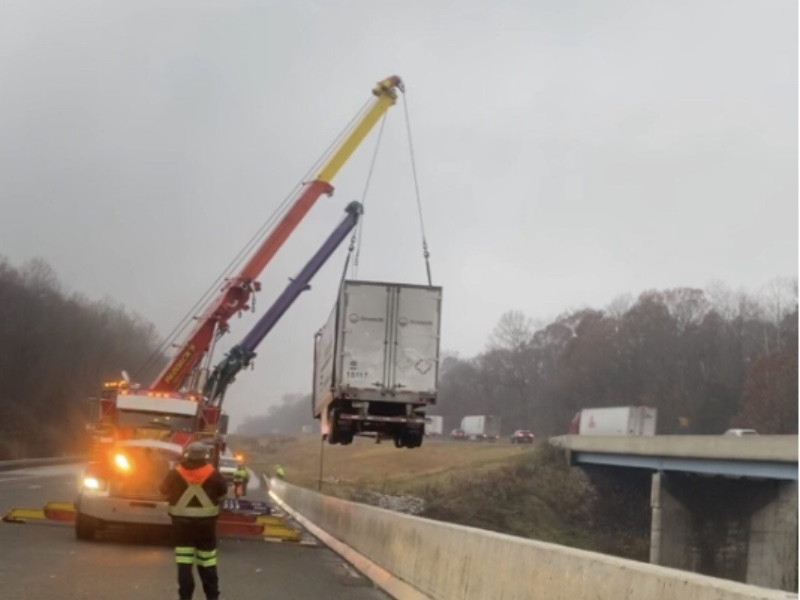
Highway towing begins with a different calculation than local work. The first question is not how to rig the vehicle but how to manage the environment around it. Speed differentials between stationary equipment and passing traffic can exceed 60 mph. An operator who does not establish scene control before rigging is creating unnecessary exposure. Every movement on a highway shoulder happens with that context in the background.
The Speed Environment Shifts Every Priority
On a live highway, the first tool deployed is lighting. Before anything happens, the truck needs to be positioned to create a buffer between the work zone and traffic. The recovery process on a highway call is not rushed. But it is compressed, because the cost of staying on an active shoulder too long rises with every passing minute.
What Highway Equipment Has to Handle
Flatbeds, extended boom configurations, and heavy rigging are not optional add-ons on a highway call. We treat them as the baseline for any professional Rossville towing response to a significant incident. A car that has gone off the roadway, a commercial truck in a ditch, or a multi-vehicle incident. All require configurations that do not fit on a compact urban unit. The scale of the job determines the load-out.
City Towing Runs on a Different Approach
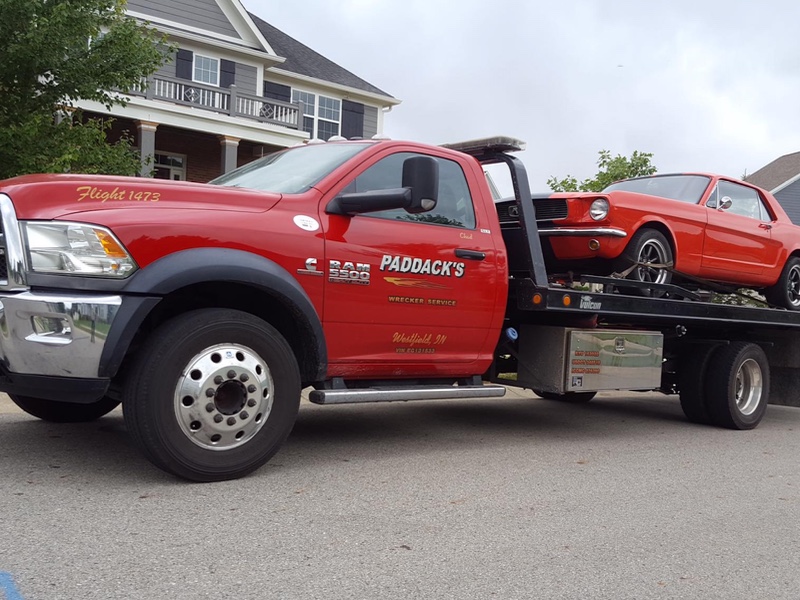
City and suburban calls bring their own set of demands. Dense streets, overhead clearances, adjacent traffic, and property constraints all shape the approach before any rigging begins. The risk exposure differs from a live interstate call. But the spatial judgment required is high in its own way. A mistake on a narrow residential street still produces delays and property concerns.
On a Rossville towing route through a local community, getting positioned correctly means assessing the scene from the cab before committing to an approach angle. Which side of the vehicle gives the cleanest access? What is overhead? How tight is the turning radius for this unit on this street? City operators develop a fast, instinctive read of these conditions through repetition across varied environments, and that read is what keeps city jobs efficient.
How City and Highway Equipment Compares
The right setup for a city call and the right setup for a highway call share the same basic categories but use them in very different proportions:
City and local calls typically call for:
- Compact wheel-lift units
- Short-wheelbase trucks for residential access
- Standard lighting
Highway and interstate calls typically call for:
- Full flatbeds and heavy rigging
- Extended reach and boom configurations
- Robust safety lighting packages
- Commercial recovery capability
Rossville towing calls across central Indiana can span both profiles, and an eight-location operation like Paddack’s is built to match the right unit to either environment.
Paddack’s Wrecker Service: Dependable Rossville Towing Across Indiana’s Roads
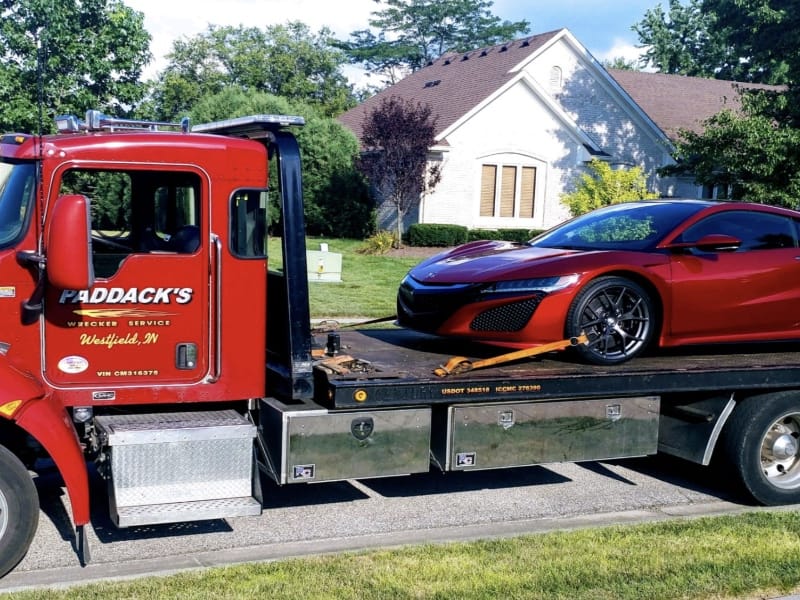
Paddack’s Wrecker Service has been operating since 1975, growing from a founder-built operation into a leader in heavy transport and wrecker services across central Indiana. With eight locations and a fleet prepared for everything from light-duty to major commercial recovery, our Rossville towing reach covers both local community streets and the state’s busiest freight corridors. Our operators are trained for both. Nearly five decades in this industry produces the kind of experience that shows up in how a crew reads a scene and gets the job done.
From local residential calls to Rossville towing on active interstate corridors, Paddack’s brings the same level of preparation to every dispatch. Our eight-location coverage means faster response across a wide geographic area, and our fleet depth means the right truck rolls on the right call. When you need towing in central Indiana, Paddack’s has been the name operators, agencies, and freight companies count on for a long time.
FAQ
What types of vehicles qualify as heavy-duty for towing purposes?
Heavy-duty towing covers semi-trucks, large commercial vehicles, buses, heavy equipment, and oversized trailers that exceed the weight and size limits of light and medium-duty equipment. The specific threshold varies by truck class, but any vehicle over roughly 26,000 pounds gross vehicle weight typically requires a heavy-duty rig to move safely.
How do multi-location towing companies coordinate faster response times?
By staging trucks at strategic points across a service area rather than dispatching everything from a single location, multi-location companies reduce the distance between any given call and the nearest available unit. Combined with centralized dispatch that tracks unit positions in real time, this setup cuts average response times significantly compared to a single-hub model.
What role does lighting play in roadside safety for a tow truck crew?
High-visibility warning lights are among the most effective tools a roadside operator has. They alert approaching drivers well before they can see the stopped vehicle or workers, giving traffic time to slow and merge over. Studies have shown that real-time alert systems, which push warnings to approaching drivers through connected devices, reduce the risk of secondary incidents substantially.
What is the difference between a recovery and a standard tow?
A standard tow moves a vehicle that is accessible and can be rigged without special extraction. A recovery involves getting a vehicle back to a position from which it can be towed, which may require winching, rigging from unusual angles, or using cranes and heavy rigging for vehicles that have rolled, gone off-road, or become embedded in obstacles.
How do operators handle a jackknifed commercial truck?
A jackknifed semi requires a coordinated approach: securing the load to prevent shifting, rigging both the tractor and trailer independently when needed, and using one or more heavy-duty recovery units with the pulling capacity to straighten and reposition the combination without additional damage. Traffic control on the surrounding roadway is managed throughout the operation.