
Not Much Room to Work
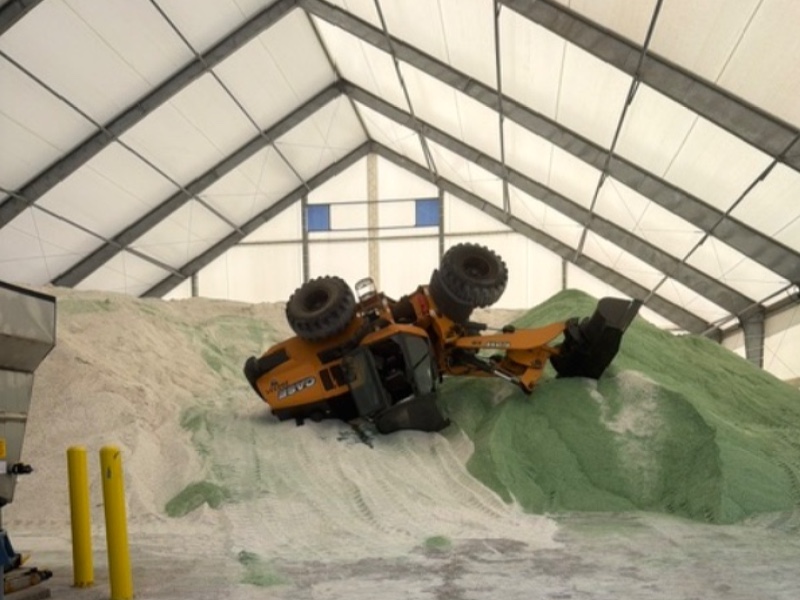
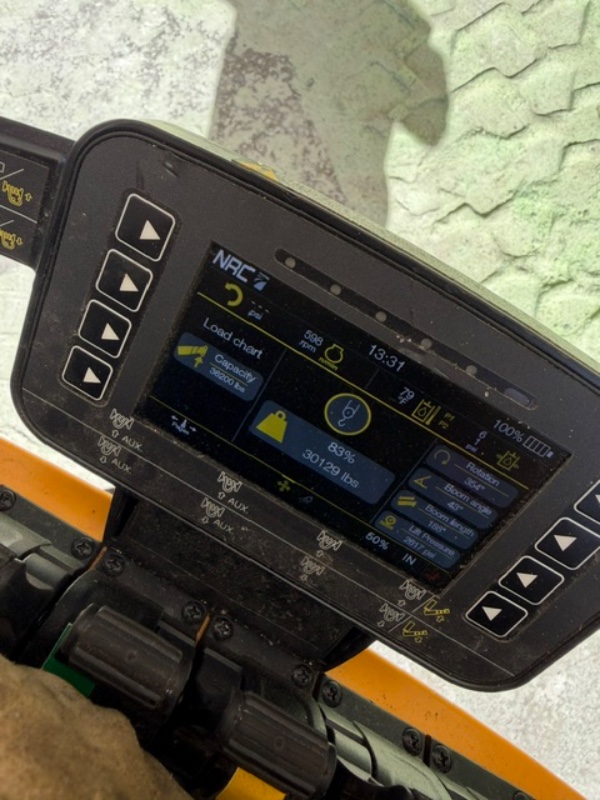
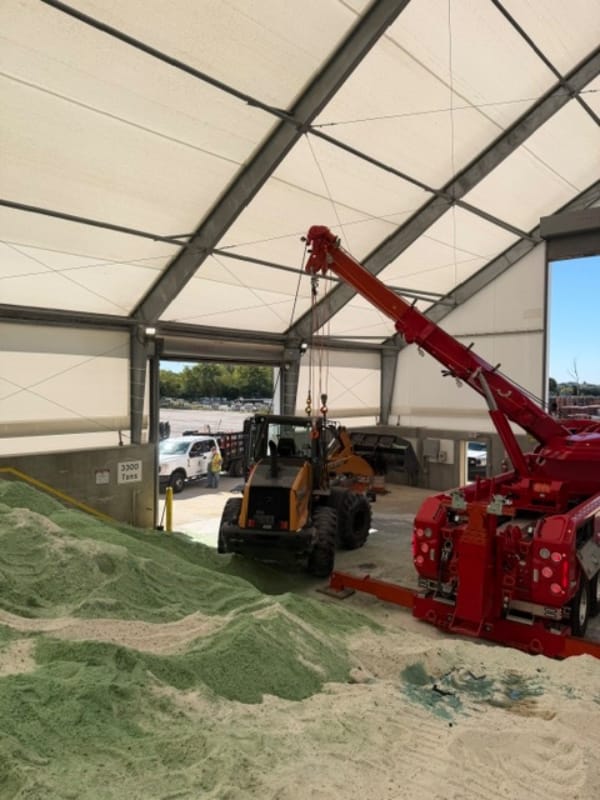
A salt storage building offers a very different work area from an open roadside. When we received a call for heavy equipment towing in Westfield, a 30,129-pound Case 621XR front-end loader was upside down against the side of a salt pile. The roof overhead was going to influence nearly every part of the recovery.
Our operator brought a brand-new 65-ton NRC wrecker to the building. Only one of our operators was on the job, alongside personnel from the highway department. The loader had some damage to its cab and engine hood, but before we could set it back down, we had to find enough room to work.
The Salt Pile Had to Move First
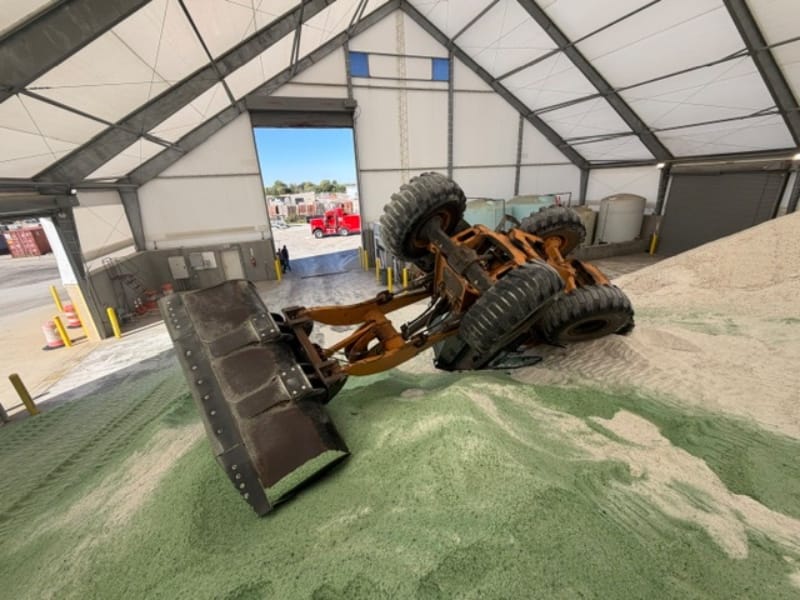
A vehicle weighing more than 30,000 pounds needs space to move during an upright. We had to position the wrecker, rig the loader, and control its rotation without hitting the building around us. The salt pile was occupying part of the area we needed.
We asked the highway department crew to use another front-end loader to move some of that salt. Once the space was clear, we could bring the NRC into position. Moving material out of the way may sound like a minor preliminary step, but it changed the angle from which we could approach the overturned machine.
An Air Roll Beneath a Low Roof
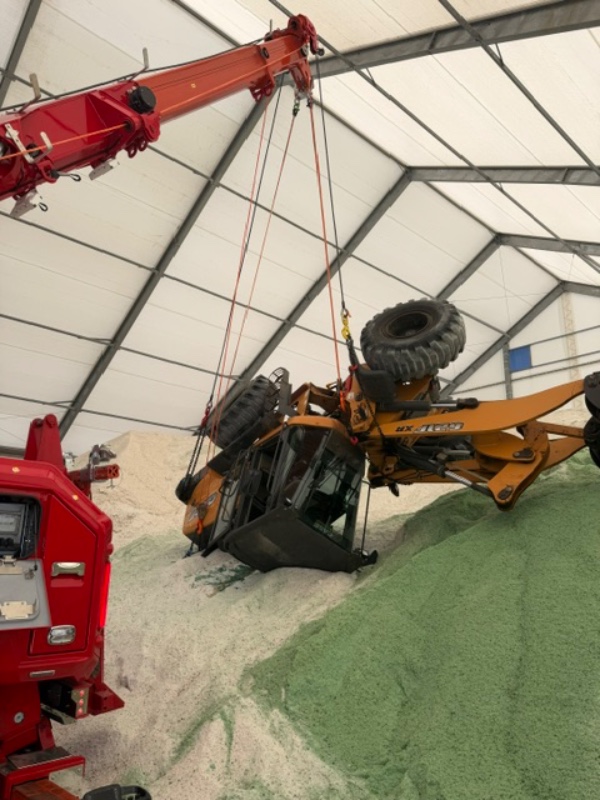
Our operator attached the main winches to the high side of the Case loader and the auxiliary winches to the low side. With both sets of lines rigged, we lifted the machine completely into the air and used the auxiliary winches to air-roll it. Instead of dragging the loader over the floor, the winch arrangement let us control its movement while it was suspended.
The loader was upright, but the building was still limiting our options. The low roof restricted the height of the wrecker’s boom. Our operator had to rotate, boom down, and slide the boom forward before the machine could be lowered beside the truck.
The tricky part of this Westfield heavy machinery recovery was that getting the loader right-side up did not automatically give us room to put it down. We needed to finish the movement without bringing the boom into contact with the roof.
Upright Wasn’t the End of the Job
Once the loader was back on its wheels, the next task was to move it toward the exit. For this heavy equipment tow in Westfield, our operator had to break down the rigging, reposition the wrecker, and prepare to winch the machine toward the door.
The highway department wanted the loader lined up with the doorway so it could be loaded onto a trailer for inspection and repair at a dealership. During this Westfield heavy equipment recovery, we did not start the engine. A machine that has been upside down may suffer additional engine damage if it is restarted before being checked.
The work came down to a few distinct stages:
- Move enough salt to create a workable space.
- Rig the high and low sides, then lift and air-roll the loader.
- Lower it within the roof clearance and winch it into line with the door.
How Paddack’s Wrecker Service Approaches Westfield Heavy Equipment Towing
At Paddack’s Wrecker Service, we know that heavy equipment recovery around Westfield can demand more than a powerful wrecker. On this call, our brand-new 65-ton NRC provided the lifting capability, but our operator still had to manage the rigging and work with highway department personnel to make the limited space usable. The operator spent a couple of hours on scene getting everything rigged and carrying out the recovery.
We approach heavy equipment towing in Westfield by working with the conditions in front of us. In this case, that meant making room around a salt pile, air-rolling a 30,129-pound loader beneath a roof, and leaving it positioned for trailer loading without risking additional engine damage.
Frequently Asked Questions
What kind of front-end loader overturned?
The machine was a Case 621XR front-end loader weighing 30,129 pounds. It had rolled upside down beside a salt pile inside a storage building.
Why did the salt need to be moved?
The salt pile blocked part of the space needed to position the wrecker. Highway department personnel used another loader to clear enough room for the recovery.
What is an air roll?
An air roll involves lifting a machine off the ground and controlling its rotation with winch lines. In this case, the main and auxiliary winches worked together to bring the loader upright.
Why was the building’s roof a problem?
The roof limited how high the wrecker’s boom could be raised. Our operator had to adjust the boom’s position to lower the machine without contacting the structure.
Why wasn’t the loader started after being uprighted?
Starting equipment that has been upside down can cause additional engine damage. We left the loader off so it could be inspected before being returned to service.
Was the front-end loader badly damaged?
The loader sustained some damage to its cab and engine hood, but the damage was relatively minor considering the rollover. It was positioned for trailer loading and transport to a dealership for inspection and repairs.