
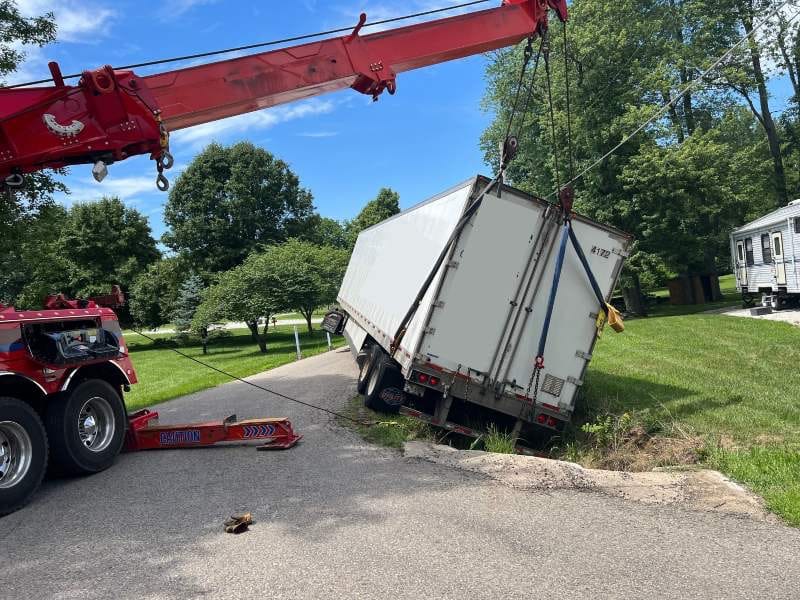
Tired Out and On the Shoulder
It all starts with a bang. And a loaded semi rolling through central Indiana goes from normal to sideways in a few seconds when a tire lets go. The sound is sharp, the wheel pulls. Traffic keeps moving. The driver has little time to think. On US-31 semi towing calls, we have seen a tire failure turn into fender damage, brake damage, and a disabled rig (!) before the truck even reaches the shoulder.
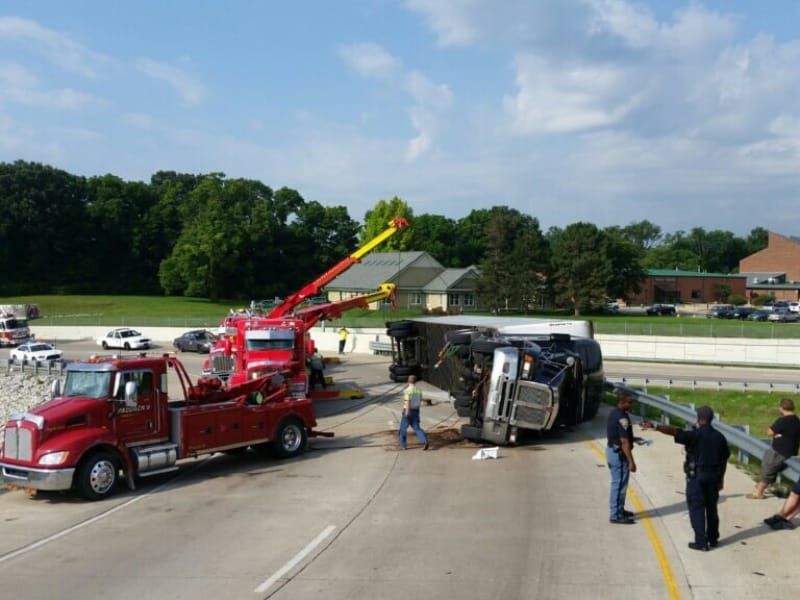
Why Semi Tires Come Apart
The first goal is always control. A blown steer tire can pull the truck toward the failed side, especially with a heavy trailer behind it. The driver has to hold the wheel steady, ease off the throttle, and avoid sudden moves. A loaded vehicle does not forgive panic braking very well.
Heat is a big reason. A tire with low air pressure flexes too much, builds heat, and can fail under load. Add hot pavement, long miles, road debris, an old casing, or a heavy trailer, and the weak spot may finally give up at highway speed. Sometimes the driver only hears the pop after the damage has already started.
We have also seen blowouts come from sidewall cuts, bad alignment, overloaded axles, and tires that looked fine during a quick walkaround. Speed makes every tire problem worse. A small casing issue at yard speed might survive. At highway speed, it can turn into shredded rubber, broken lights, torn mudflaps, or damaged air lines in seconds.
What the Driver Should Do First
Once the tire blows, the driver should keep the truck straight and let it slow down under control. Hitting the brakes hard can push the trailer out of line. Jerking the wheel can put the truck in the ditch or across another lane. Those first few seconds often decide if the call stays simple or turns into a recovery.
After stopping, the driver should set flashers, stay clear of traffic, and place warning triangles only if it is safe. Dispatch needs good details right away: direction of travel, closest mile marker or crossroad, tire position, trailer type, load status, and any visible damage. US-31 semi towing crews can plan much better when we know if the tire tore into brakes, wiring, body panels, or suspension.
When a Tire Call Becomes a Tow
A tire service truck may be enough when:
- The tire failed cleanly
- The truck is fully on the shoulder
- The rim is still usable
- Brakes and air lines look intact
- The driver has room to work safely
US-31 semi towing becomes the better call when:
- The steer tire tore into the fender
- The axle or suspension looks damaged
- A brake line is leaking
- The truck cannot build or hold air
- The shoulder is too tight for roadside work
- A loaded trailer needs to move with the tractor
On US-31 semi towing calls, we also look at the trailer, cargo, road position, and where the fleet needs the truck next. Sometimes the tractor goes to a shop while the trailer waits for another tractor. Other times, the whole combination needs to move together.
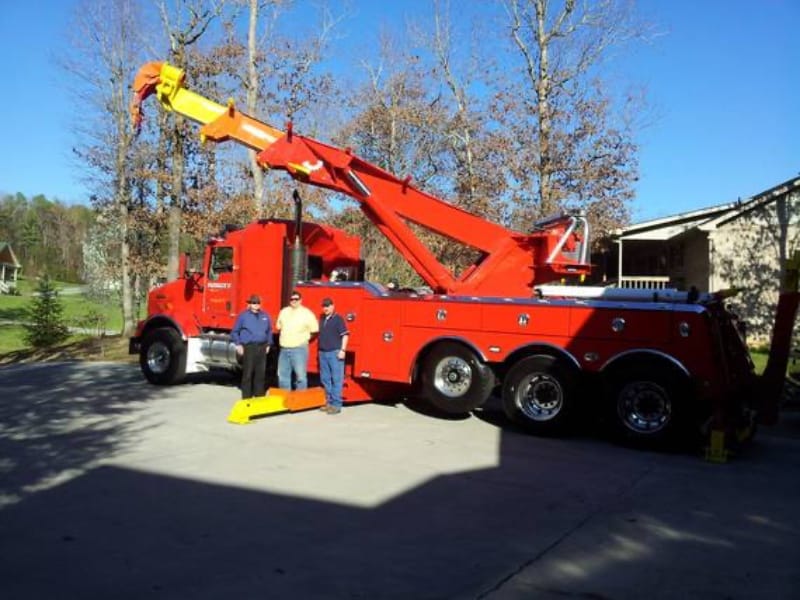
Paddack’s Wrecker Service: Reliable US-31 Semi Towing When Your Tires Give In
Paddack’s Wrecker Service has served central Indiana since 1975, starting with Norman and Vicki Paddack and later growing under Jeff Ripley. The company has deep roots in trucks, heavy transport, and wrecker work, with a fleet of more than 50 trucks and service vehicles covering the Indianapolis, Carmel, and Anderson metro area. Our US-31 semi towing work fits that history because tire failures on commercial rigs often need more than a simple roadside response.
We handle 24-hour emergency towing, roadside assistance, heavy-duty towing, and transport for drivers who need the right truck sent the first time. For US-31 semi towing, our dispatchers ask about tire position, load, damage, air pressure, road access, and the closest safe destination before the unit rolls. A blowout may start with one tire, but the real job is keeping the driver, truck, and freight from losing more time on the shoulder than they have to.
FAQs
What should a truck driver do right after a tire blowout?
Hold the wheel steady and avoid hard braking. Ease off the throttle, let the truck slow down, and move toward the shoulder only when there is room.
Can a semi tire blowout damage the brakes?
Yes. Shredded rubber can tear into brake lines, chambers, wiring, mudflaps, and nearby body panels. The damage should be checked before the truck moves again.
Is a steer tire blowout more dangerous than a trailer tire blowout?
Usually, yes. A steer tire failure can pull the truck hard to one side and make control much harder. The driver’s first few seconds matter a lot.
Why should drivers avoid limping on a blown tire?
Driving on loose rubber can damage the rim, axle, brakes, suspension, and bodywork. It can also create heat and increase the chance of fire.
When does a blowout need a heavy tow instead of tire service?
A heavy tow may be needed if the rim, axle, air system, brakes, or suspension are damaged. It may also be needed if the truck is in a bad road position.
What information should dispatch get after a tire failure?
Dispatch needs the road marker, travel direction, failed tire position, load status, trailer type, and visible damage. Photos help the towing team choose the right response.