
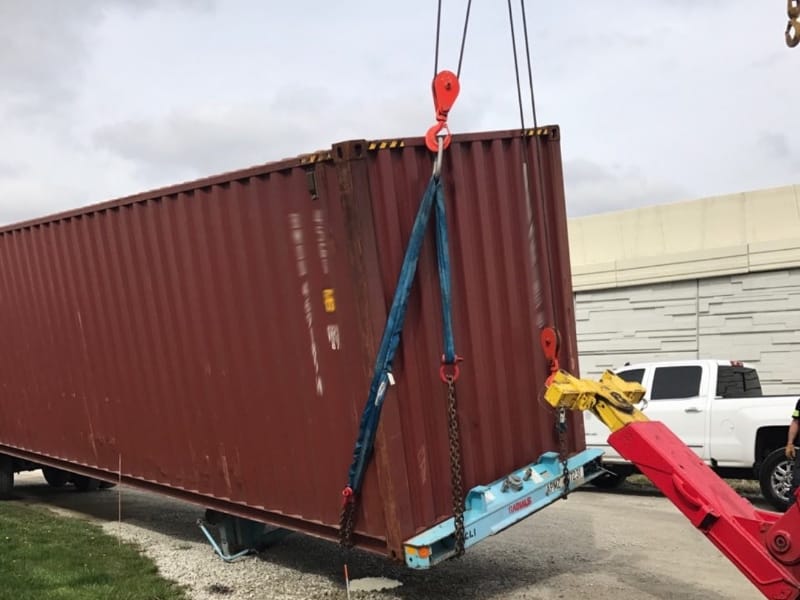
Dropped and Loaded
A parked semi-trailer can look perfectly stable without a tractor underneath it. Much of that stability comes from the landing gear, the extendable legs near the front that support the trailer after a tractor disconnects.
When landing gear bends, collapses, sinks, or fails, the front of a loaded trailer can drop or lean. US 31 semi towing can then involve a deceptively difficult problem: lifting and supporting a loaded trailer without causing additional damage.
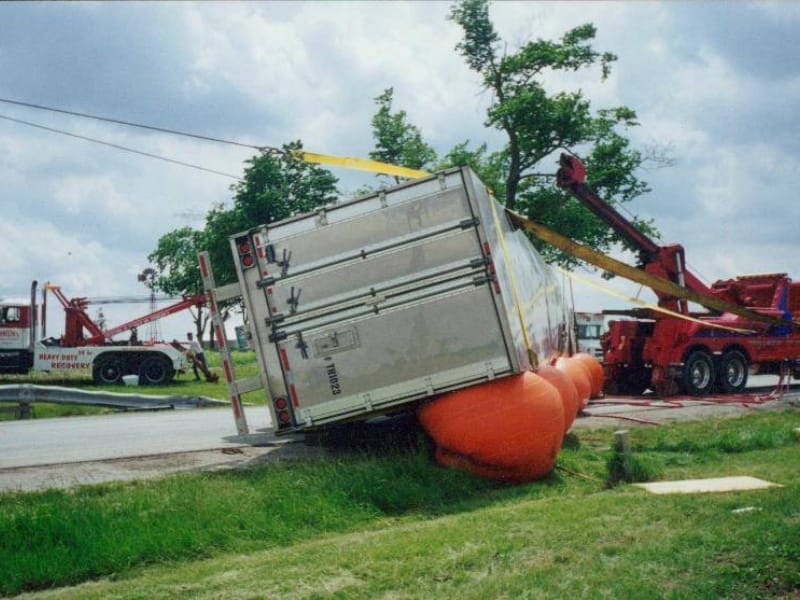
What Happens When Landing Gear Fails?
Landing gear carries considerable weight when the trailer is disconnected. If one leg gives way, the remaining leg and trailer structure can suddenly carry forces they were not intended to handle alone.
A partial failure can leave the trailer leaning. A complete collapse can put the nose close to the pavement. Landing gear can also sink into soft ground, producing much the same problem without a mechanical failure.
Either way, another tractor may not simply be able to hook up.
Why Can’t Another Tractor Simply Connect?
Normally, the tractor backs beneath the commercial vehicle until its fifth wheel engages the trailer’s kingpin. That requires the trailer to sit at a workable height.
If the nose drops too low, the fifth wheel cannot get underneath it. A pronounced lean can also put the kingpin out of alignment. Trying to force the connection risks moving an already unstable trailer.
First, the Trailer Needs Support
For semi towing along US 31, the first task may be supporting the trailer before attempting to move it. The crew has to consider where the trailer can safely take lifting or supporting force and how much weight it carries.
Important factors include:
- Whether one or both landing legs failed
- Whether the trailer is leaning
- Whether the landing gear collapsed or sank
- How heavily the trailer is loaded
- Whether the frame shows damage
- Whether the kingpin remains accessible
Once the trailer has adequate support, crews can work toward restoring a usable coupling height.
A Loaded Trailer Adds Another Variable
Weight distribution becomes particularly important during US 31 heavy truck towing involving landing gear trouble. Freight concentrated toward the front places more weight near the area that needs to be lifted.
Shifted cargo can complicate matters further. Raising one side or lifting the trailer unevenly may change how that freight rests inside.
Getting the Kingpin Back to Tractor Height
If the trailer and coupling area remain suitable for transport, crews need to raise the front enough for a tractor to reconnect.
During tractor-trailer recovery near US 31, the trailer may need to be lifted and stabilized before a tractor can position its fifth wheel beneath the kingpin. The failed landing gear also has to remain controlled so it does not interfere with the connection.
If damage prevents the trailer from returning to service, additional recovery or transport arrangements may be necessary.
Sometimes the Ground Is the Problem
Landing gear does not have to break for a trailer to end up too low. A loaded trailer parked on soft ground can push its landing feet into the surface.
For semi recovery around US 31, that distinction matters. Bent landing gear, mechanical failure, trailer damage, and legs buried in soft ground can require different approaches.
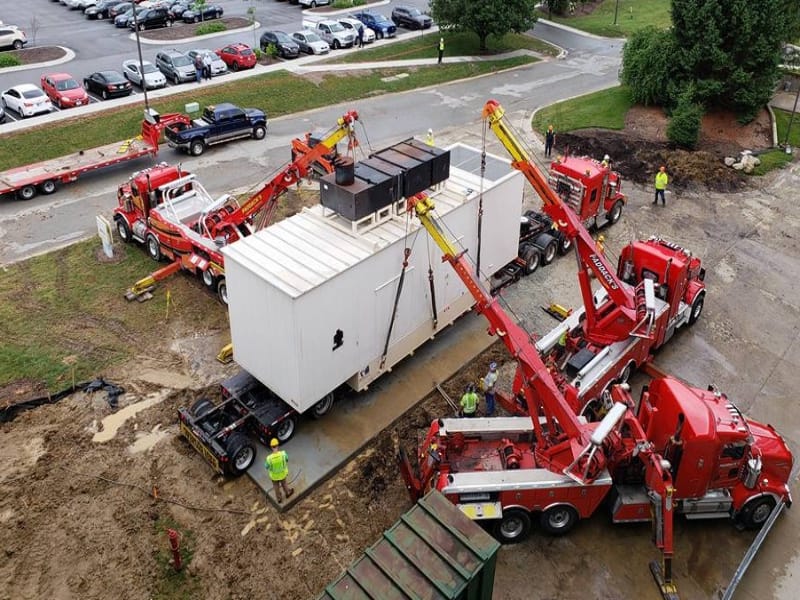
Paddack’s Wrecker Service: Your Go-To Solution for US 31 Semi Towing
Paddack’s Wrecker Service has eight locations across Indiana. A landing gear failure shows why a disabled semi sometimes needs recovery work before anyone can tow it.
With US 31 semi towing, the job may begin by supporting a dropped trailer and returning it to a workable height. Semi towing on US 31 can then address the disabled combination based on the trailer and coupling condition. For Paddack’s, US 31 semi towing covers situations where simply backing up and hooking on is no longer an option.
FAQs
Can a loaded trailer be lifted after the landing gear collapses?
Yes, depending on the condition of the trailer and where it can be supported. The load weight, trailer damage, and position of the failed landing gear all need to be considered first.
What causes semi-trailer landing gear to fail?
Mechanical damage, bent components, excessive loading, impact damage, and deterioration can contribute to failure. Landing gear can also sink into an inadequate parking surface even when the mechanism itself remains intact.
Can a tractor connect to a trailer with broken landing gear?
Possibly, but the trailer may first need to be raised and stabilized to the correct coupling height. The kingpin and surrounding trailer structure also need to be suitable for connection.
What happens if only one landing leg collapses?
The trailer can lean toward the failed side while the other leg takes additional load. Crews need to stabilize the trailer before attempting to reposition or reconnect it.
Can landing gear sink into asphalt or soft ground?
Yes. A loaded trailer puts substantial force through relatively small landing feet, and an inadequate surface can give way underneath them.
Does the cargo affect a dropped-trailer recovery?
Yes. Cargo weight and its position inside the trailer affect the forces involved in lifting and supporting the front of the trailer.